
For a 52 sqm living room, a chandelier with 24 bulbs was purchased, but the architect’s error left the space dark. The cost of this mistake? 700,000 rubles.
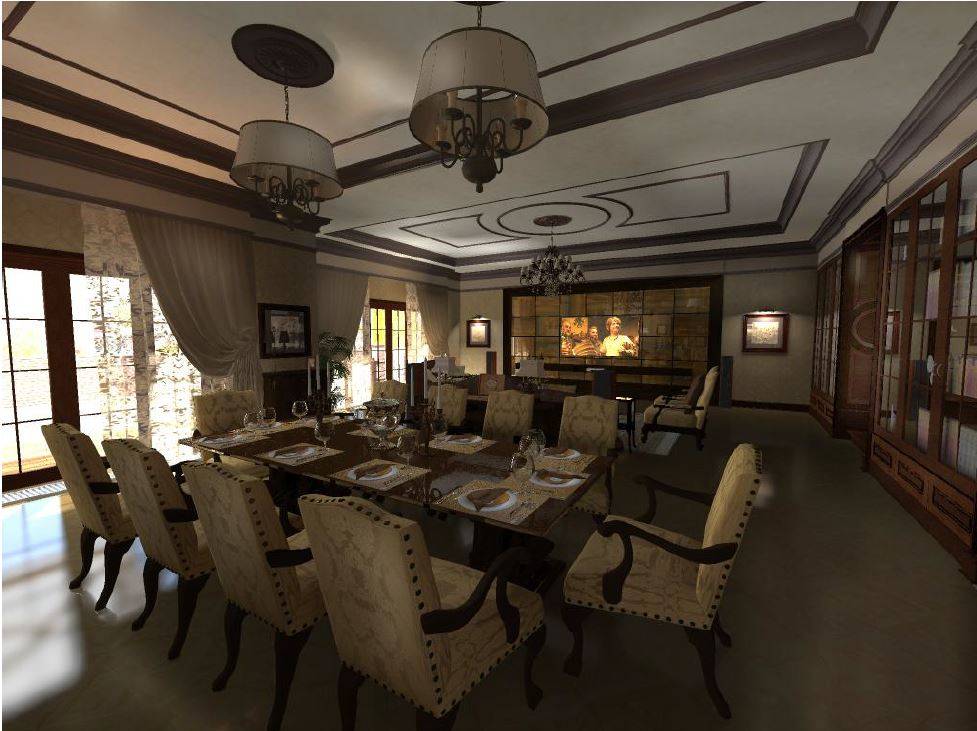
A certified architect from Rostov-on-Don designed a house in the neoclassical style: facades and interiors. The construction was managed by the client’s assistant.
When the client arrived to accept the final work, he was met with an unpleasant surprise. In the most grand room of the house on the first floor, which is 52 square meters, it was dark despite the numerous light fixtures.
The one-and-a-half-meter chandelier with 24 bulbs (with the maximum light output halogen bulbs for the E14 socket) did not help. After removing the dark fabric shades from all three chandeliers and two wall sconces, the situation did not improve. It was dark on all floors in all rooms.
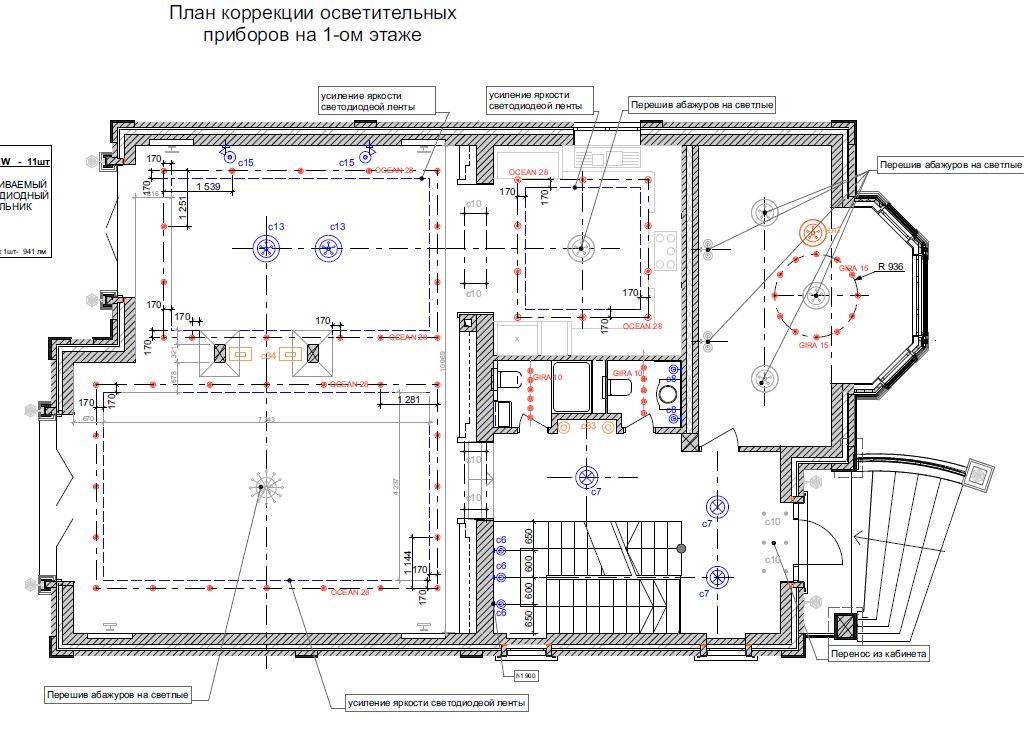
Five fixtures: 36 halogen bulbs with a power of 42 W and 39 meters of LED strip could not illuminate the living room and dining room with a total area of 86 square meters. How could this happen? In Soviet times, a chandelier with five 40-watt bulbs was enough to light the living room “with ease.” And in the kitchen of a “Stalinka,” there was just one 100-watt bulb. Here, there is more than one and a half kilowatts, and it’s still dark!
The client left to be upset in a rented apartment, while his assistant tried to solve the problem herself. The first thing she did was call the architect. He was very surprised, asked what kind of bulbs they had bought, the most powerful ones or not? He suggested adding more halogen bulbs around the perimeter. And also, as an option, he added that they could change the shades to lighter ones. They are sold at IKEA. Or they could be custom-made…
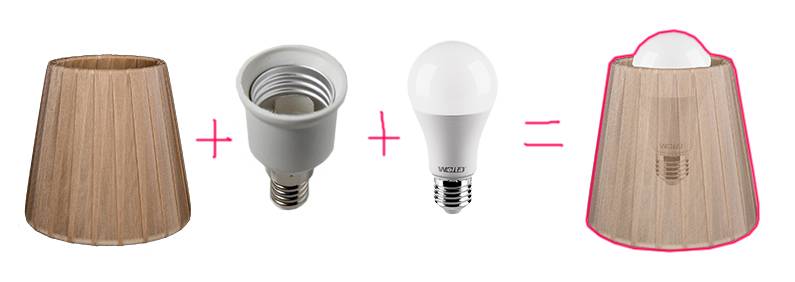
The client categorically refused to add more recessed lights. It was decided to look for more powerful bulbs. They bought a mountain of bulbs and adapters from E14 to E27 sockets. However, when they started inserting the “powerful” E27 bulbs with the adapter, it turned out that they stuck out too much from the shade and looked shabby.
A week later, it became clear that the situation had reached a dead end. They started looking online for lighting specialists and called the Neolux design studio.
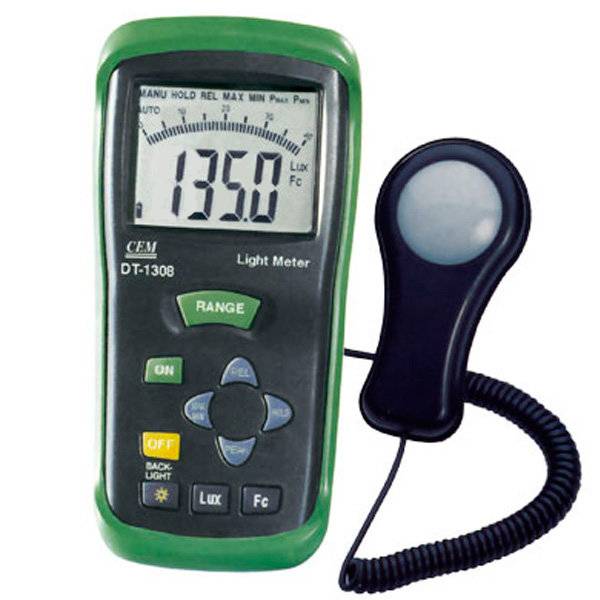
I arrived at the site with a light meter and a laser tape measure in the evening. To assess the level of illumination not by feelings but with the help of an accurate device. From my experience, I knew that such problems are usually solved by replacing bulbs with more powerful ones. But in this case, everything turned out to be more complicated.
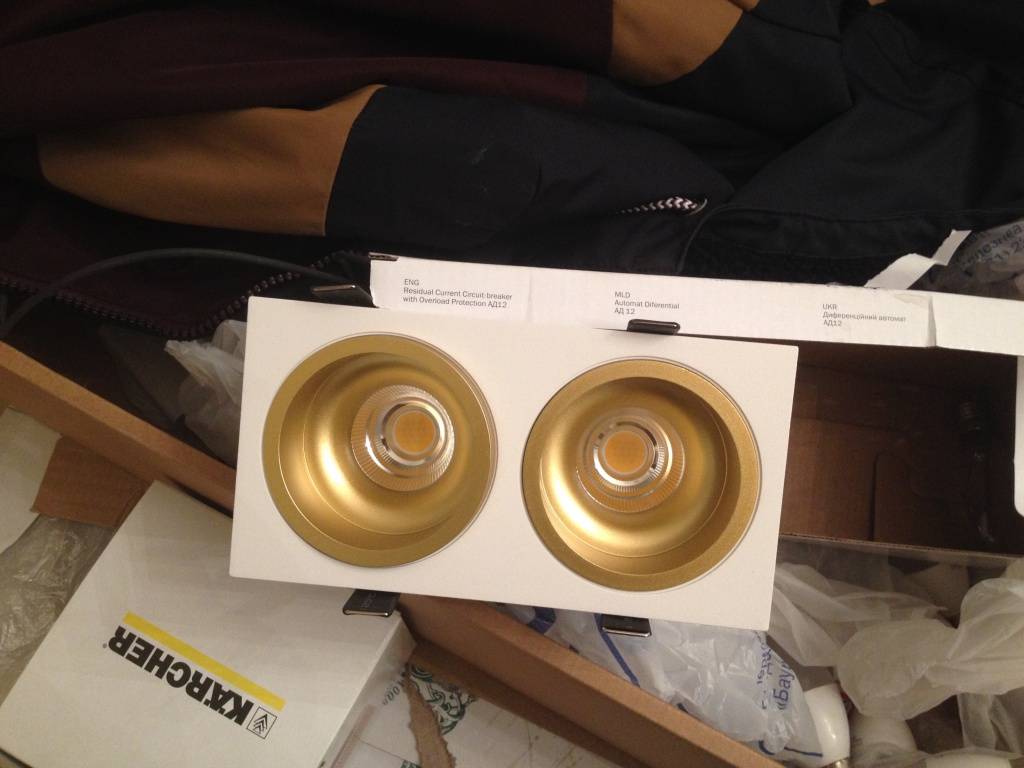
In the dim light of the hall, I saw a couple of removed plush shades and a decent set of bulbs. There was also one expensive modern recessed light, which, as it turned out from a conversation with Svetlana (the client’s assistant), was suggested as a solution by the architect.
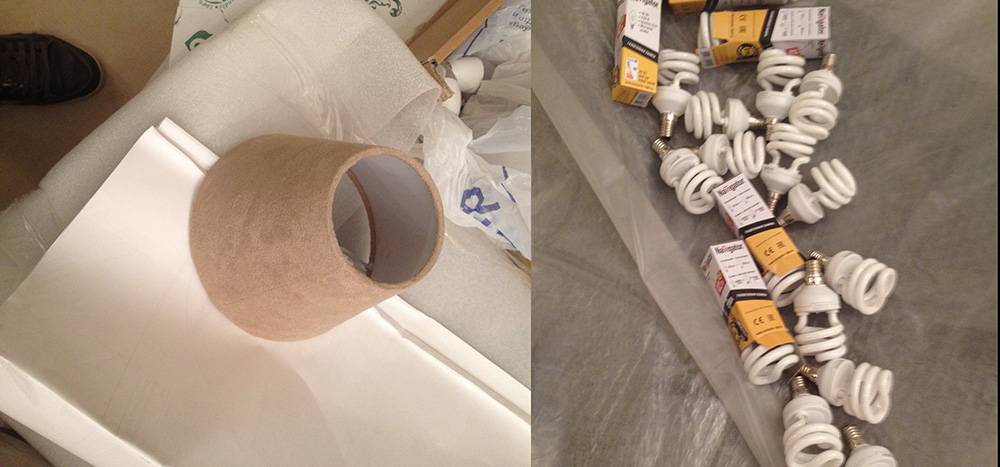
Three fixtures with E14 sockets and two wall sconces on the wall were merely decorative, local lighting. But why doesn’t the LED strip create general lighting?
Firstly: The electricians used the cheapest strip with a low light output per meter. Secondly, the light from the strip was not reflected but absorbed by the surface painted in dark brown, according to the design project. This, perhaps, is the grossest mistake in the lighting design of this project – I thought.
The device showed an average value at the level of the working surface (dining table) 100 lux. According to Soviet standards, the norm for this room is 150 lux. According to modern European standards – 200 lux on the table and 150 lux for the surroundings. The level of illumination needs to be increased by two times!
In the kitchen, the light meter showed 135 lux at the level of the working surface. In the hallway – 72 lux
Analysis of the situation. Lighting of the living-dining room.
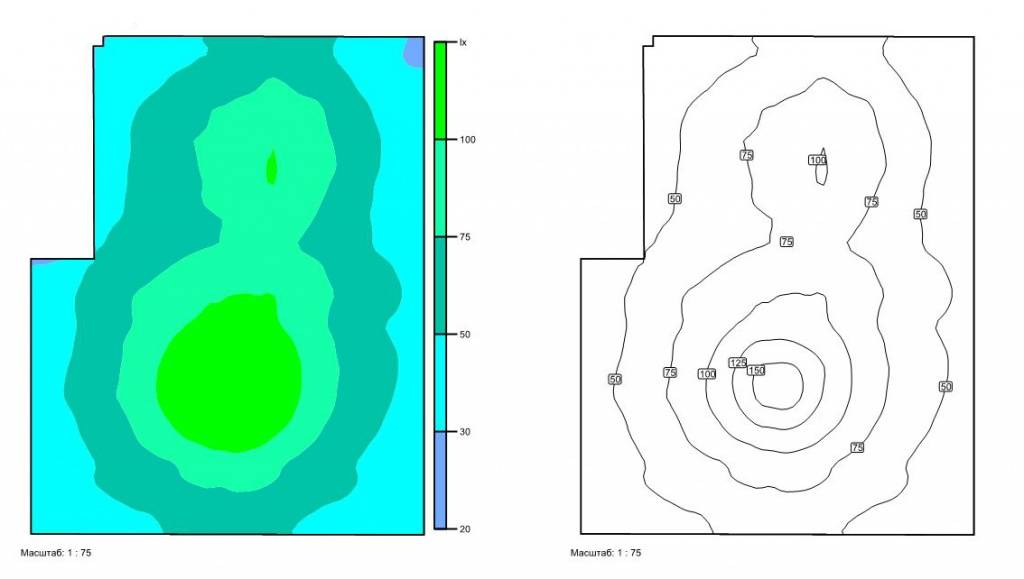
Dark walls, dark floor, dark fabric shades do not contribute to light reflection. We only observe sufficient lighting levels directly under the chandeliers. In the corners of the room, the level is two times lower than the norm. We can see this in the photo – the walls are not illuminated at all:
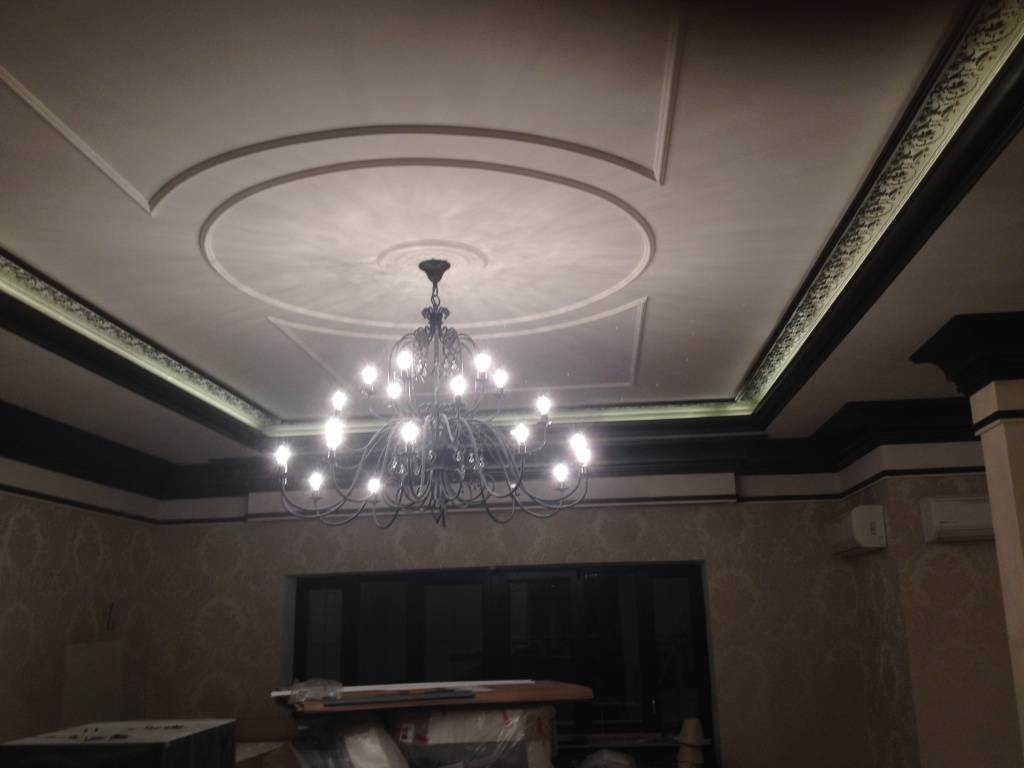
Beautiful and expensive wallpaper is not illuminated. The texture and pattern of the walls are not emphasized. Due to the incorrectly designed lighting, the interior design does not work.
Recommendations. Lighting calculation.
I made a lighting calculation, selected fixtures and bulbs, and prepared recommendations for all rooms in the house. It turned out to be a challenging task to find multi-arm chandeliers with E27 sockets.
Europeans usually use chandeliers as decorative elements, while the main lighting is created with recessed fixtures.
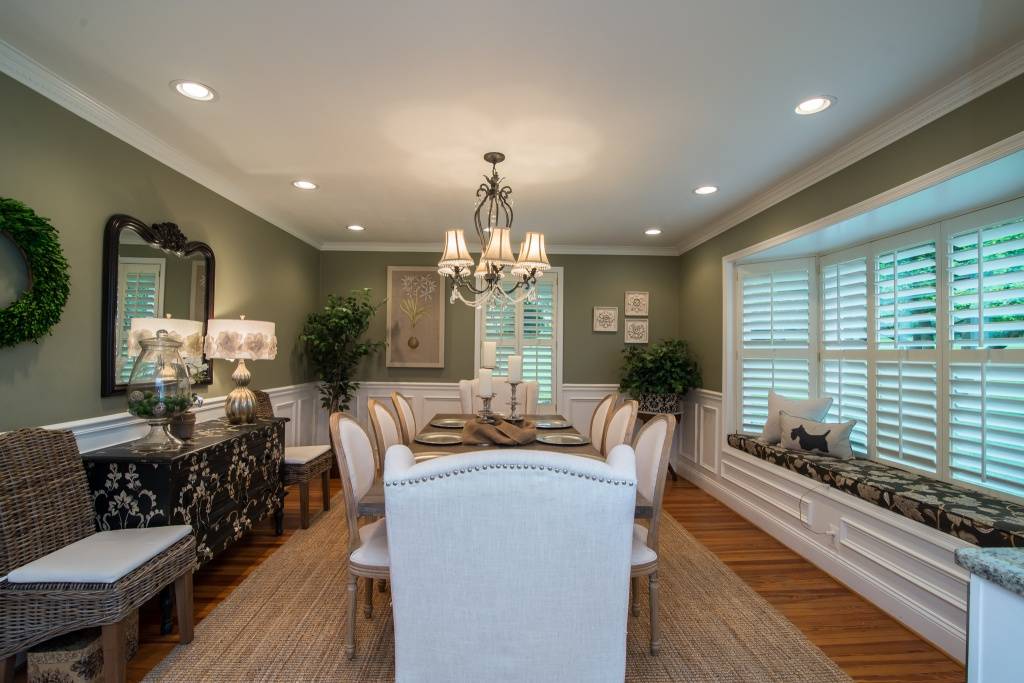
Therefore, designer chandeliers in the neoclassical style are usually with E14 sockets. Our designers typically create general lighting using LED strips. Clients, however, believe they are buying expensive chandeliers with 24 bulbs to ensure the room is well-lit…
In addressing the task at hand, I proceeded from the understanding that the client had already spent a significant amount on lighting, and I should propose a solution that is economical and justified.
Solution to the task:
-
Replace the LED strip with ULTRA-5000 24V WARM 2X (5630, 300 LED, LUX).
-
Place the strip in a corner reflector with an oval diffuser for better light distribution. Paint the dark niches decorated with moldings in a light color.
-
Offered several options for adding and replacing chandeliers with fixtures with E27 sockets.
Result: Acceptable level of illumination
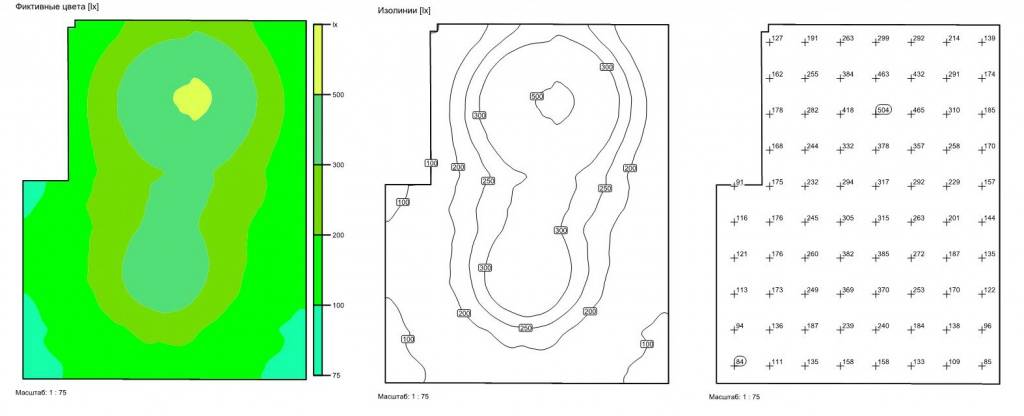
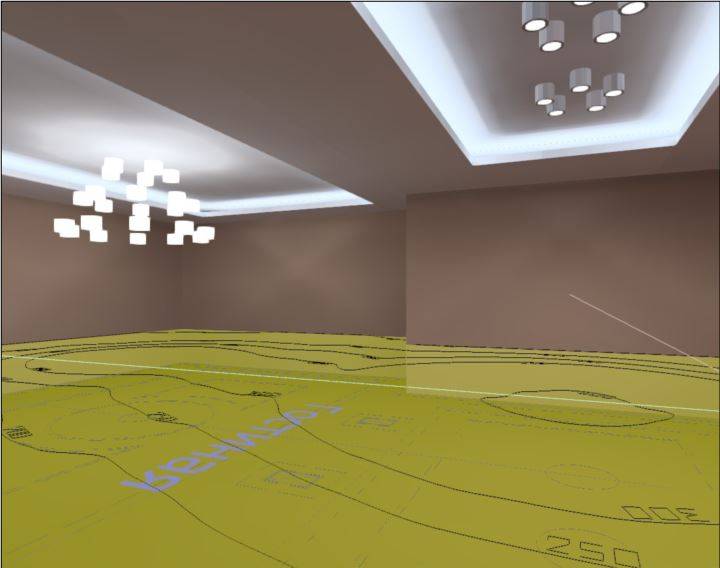
I made such calculations for all rooms.
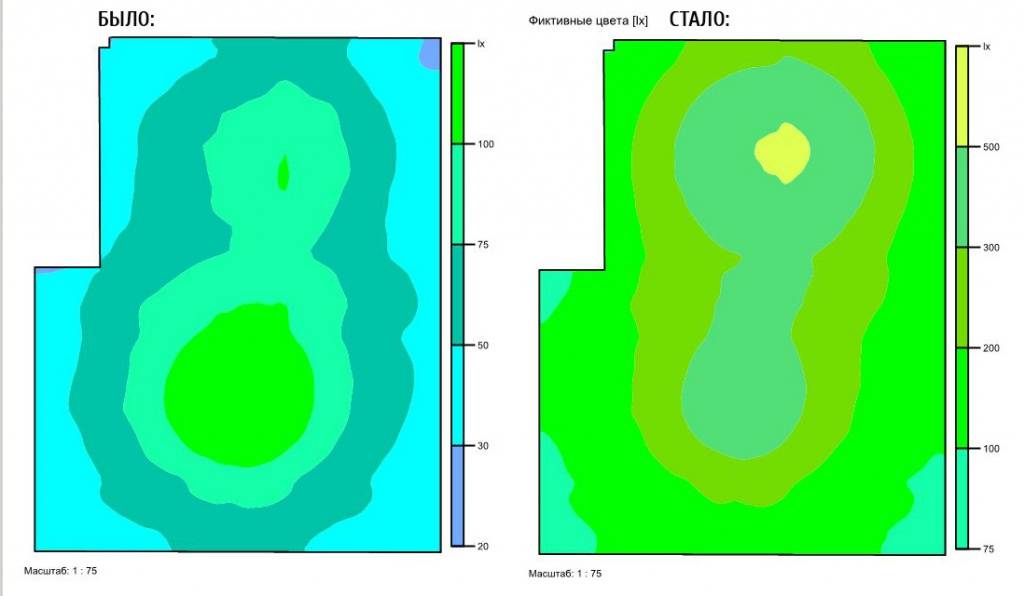
Before/After:
Sad ending.
Unfortunately, I had no direct contact with the client; I passed all information through an intermediary. I did not want to undermine trust in the architect due to corporate culture. In short, I could not convince the client to take my proposal.
The client preferred to spend an additional 700,000 rubles to solve this problem.
How this happened, I do not know. I only know the result. The company selling lighting proposed to make adjustments. Do you think the managers selling fixtures will suggest the calculated number of fixtures or a bit more?
The sellers proposed to install an additional 34 recessed fixtures for the living-dining room, each with 1487 lumens (A total of 50,558 lumens) An additional 50 thousand lumens!!! For comparison, a regular 60-watt incandescent bulb provides a light output of 735 lumens. These 34 fixtures illuminate the room like 68 60-watt incandescent bulbs!
In addition, they suggested replacing the LED strip with a high-brightness strip, reupholstering the shades in light colors, and for the finishing touch – adding a couple of LED fixtures on the wall, each with 495 lumens.
In terms of style, these fixtures do not fit the interior at all!
Here’s what it turned out:
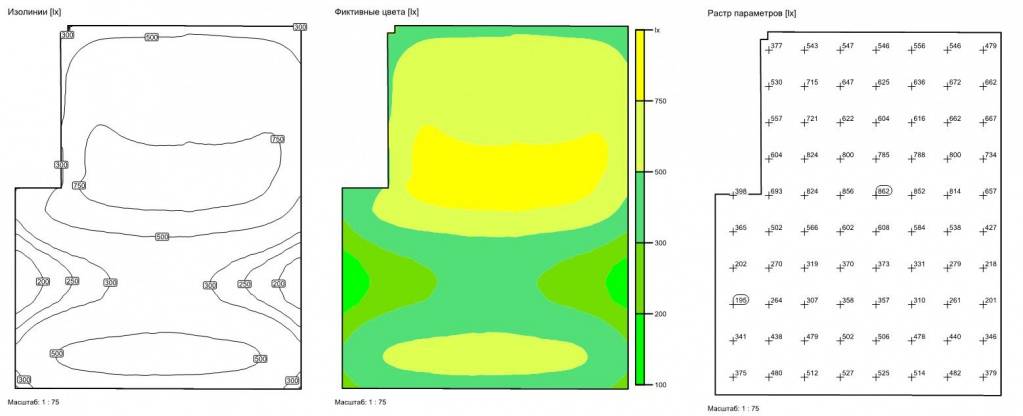
Maximum illumination of 876 lx instead of the original 150 lx. 6 times!!!
Average illumination level of 525 lx instead of 100 lx according to measurements.
The client rapidly jumped from one extreme to another. From a cave to an operating room…
<span style="color:…